

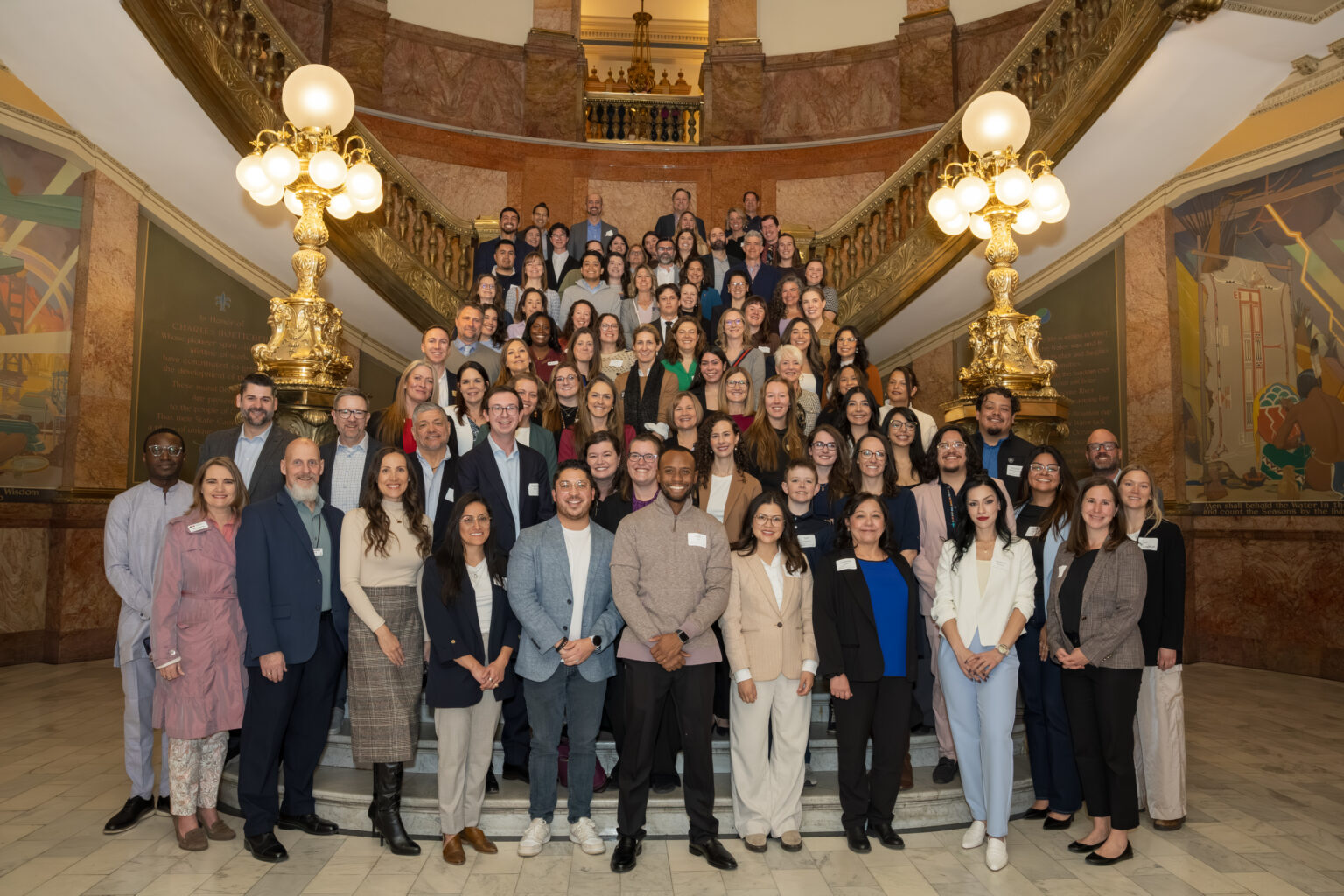
Postsecondary & Workforce Readiness Day at the Capitol Advances Big Three Access for All Colorado Learners
This week, Colorado Succeeds and the Homegrown Talent Coalition gathered at the State Capitol for the second annual Postsecondary and Workforce Readiness (PWR) Day. More than 100 leaders from policy, education, and business came together to advance a shared goal: expanding access to the Big Three across Colorado.
The Homegrown Talent Coalition is working toward a statewide vision that every learner graduates with at least one of the Big Three experiences—college credit, industry credentials, or high-quality work-based learning—aligned to their passion and future plans. PWR Day at the Capitol highlights the pathways making that vision possible and reinforces the momentum needed to scale them statewide.
The event elevated student voices, district leaders, and policymakers leading in K-12 education, and made one thing clear: Big Three opportunities must be available to all learners across Colorado.
Highlights from PWR Day at the Capitol
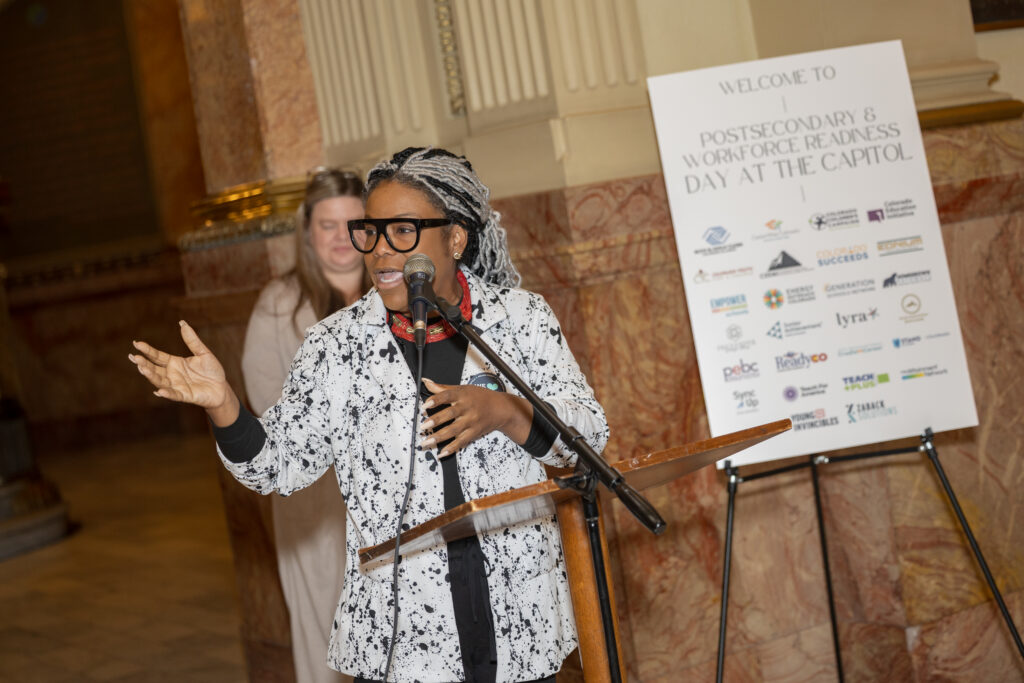
Assistant Majority Leader Jennifer Bacon spoke about the importance of policymaking that reflects students’ lived experiences. She noted that when she speaks with students, they consistently talk about wanting to see their futures more clearly and understand their place in the world. PWR opportunities help students envision possible futures, develop leadership skills, and discover their purpose.
“Every time I hear students, they’re talking about the tangible need to see their futures, and to see if they’re able to do the job, or even interested in the job,” said Bacon. “In order for us to be great policymakers, we need to listen to our students.”
Representative Katie Stewart from southwest Colorado spoke to the importance of equitable access to PWR opportunities, particularly in rural communities. Dr. Jon Hoerl, Principal of Durango High School, echoed that call, emphasizing that geography should never define a student’s destiny. Over the past decade, Durango High School has expanded from zero career pathways to 14, increasing career and technical education (CTE) offerings and concurrent enrollment along the way. Last year alone, families saved more than $7 million in tuition through AP credits and concurrent enrollment, proof that when schools invest in meaningful pathways, students graduate with a head start on college, career, or both.
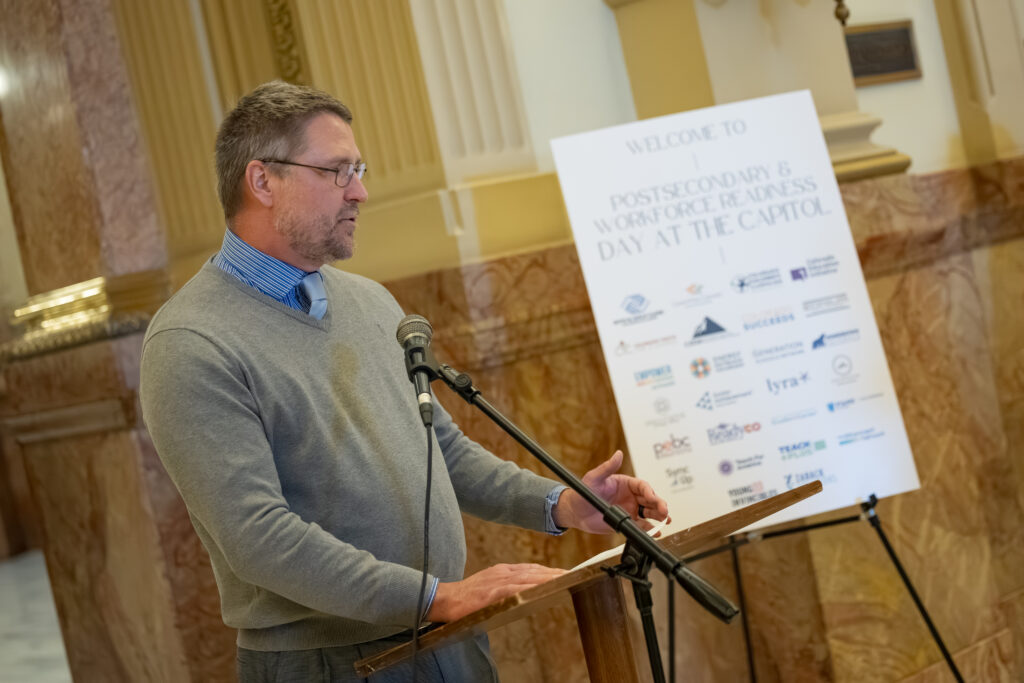
“PWR is what makes a junior stay in school because they finally see a pathway in trades come to life, or experience the health science pathway and determine if it’s the right fit, or design an engineering project with real-life applications,” Dr. Hoerl said.
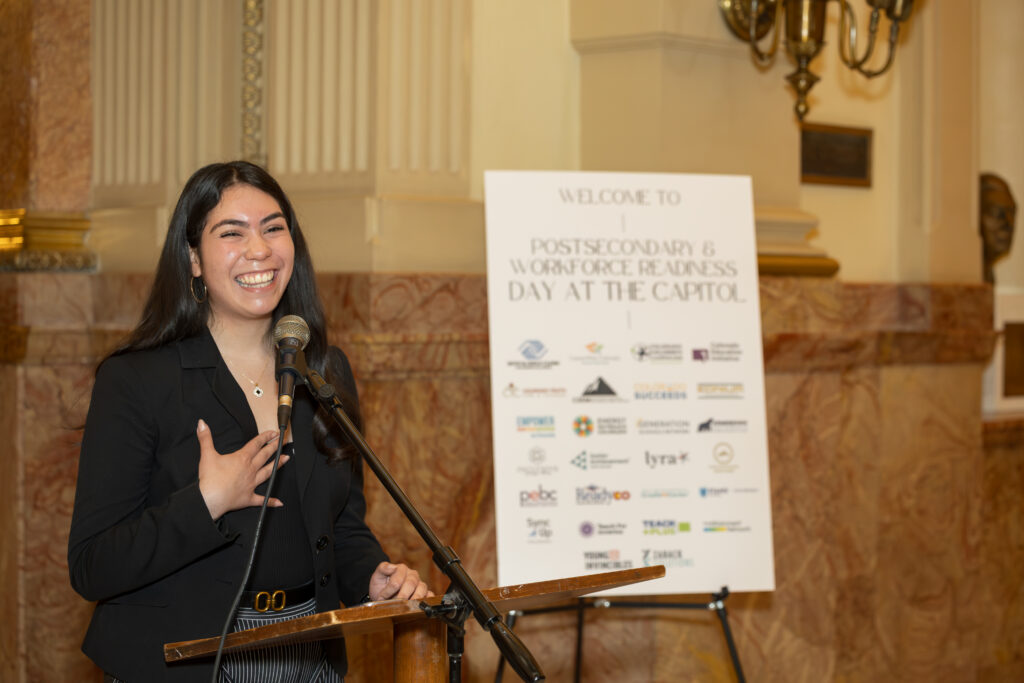
The student experience was reflected in remarks from Fatima Najar Madera, a senior from William Smith High School in Aurora. Fatima emphasized the importance of finding her path through her high school’s diverse offerings. After enrolling in the small business management program, Fatima gained valuable skills and clarity about what she didn’t want to do as a career. She later interned at an immigration firm that proved a better fit and was hired on. Now, she’s interning at the State Capitol, gaining real-world experience no classroom or textbook could provide. In addition, Fatima is taking concurrent enrollment classes at the local community college to earn college credits and get a head start on a degree.
Whenever I talk to friends at other schools, they always remind me how lucky I am,” Fatima said.
“They tell me, ‘I wish I could have internship experiences. I wish I could know if this career is really meant for me.’ And they remind me that I’m living the life that most students hope for. So my hope for the future is that every student can have these opportunities like me.
The final speaker was Svetlana Mikhaylova, a Jeffco Public Schools graduate working as a Lead HR Project Manager at Lumen Technologies. Mikhaylova shared her experiences as an immigrant in the education system, and how a career speaker in high school helped her see that her immigrant experience could be a benefit rather than a limitation. Mikhaylova enrolled in business classes through her high school, tackled real-world business challenges such as building marketing campaigns and developing prototypes, and designed a plan to pay for college.
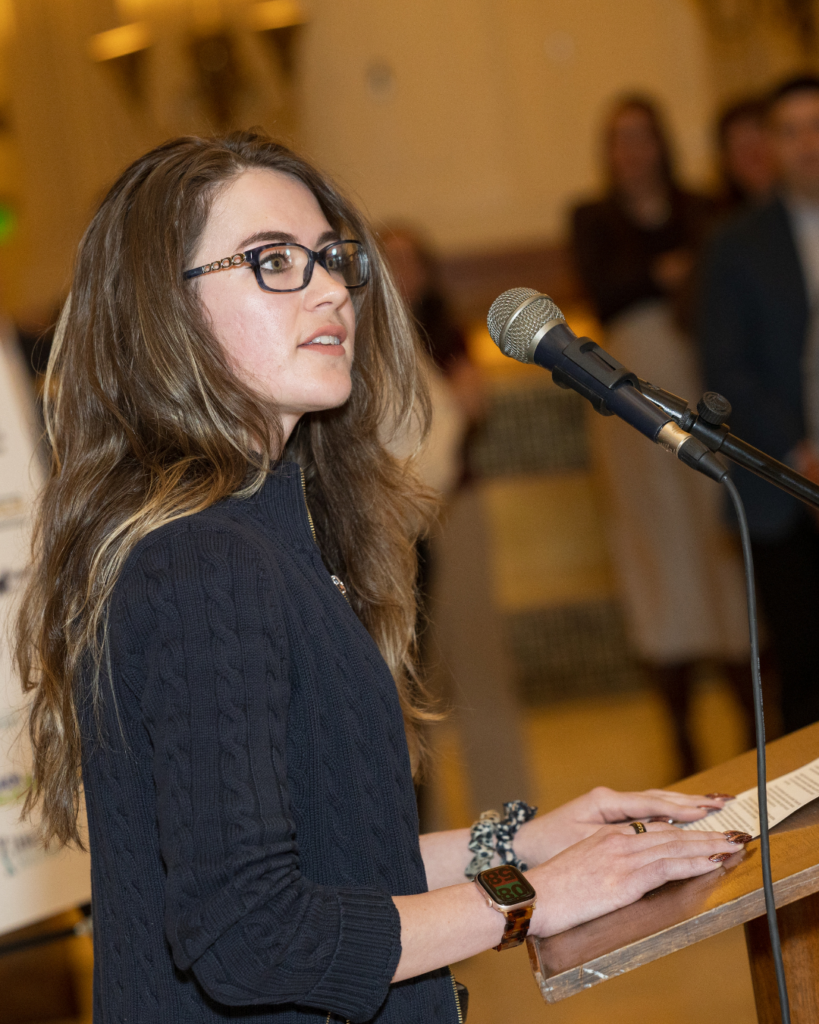
“My story is just one example,” Mikhaylova shared.
“There are students across Colorado right now, with the same grit and ambition that I had in high school. Experiences like the one I had should not depend on chance. They should be embedded in how we prepare students for life after graduation.”
“When workforce readiness is part of the core educational experience, students are not just told to work hard; they are given the tools to translate their desire and drive into real career opportunities.”
Throughout the morning, speakers underscored that students are eager for clarity about their futures, and that the Big Three offer a tangible way to provide it. But as the speakers emphasized, access is not yet universal. Sustained investment, policy alignment, and business partnership will determine whether these pathways scale statewide.
Dr. Hoerl summed it up best: “We need a unified front. We need policymakers to continue modernizing how we measure success. We need more businesses to see themselves as partners in our educational community, providing opportunities for every student to engage in meaningful work-based learning. And we need families to know that a meaningful diploma is one that leads directly to a living wage and a purpose. Let’s keep this momentum moving. Let’s ensure that by 2030, Homegrown Talent isn’t just a catchy coalition name — it’s a reality where young people, regardless of their zip code, have the opportunity, knowledge, and skills to thrive.”
Thank you to the policymakers, educators, business leaders, students, and alumni who continue advancing Postsecondary and Workforce Readiness across Colorado.