

The Business Case for Building Talent in High School
A construction industry leader explains why high school pathways are a smart investment for employers
“College for All” Closed Some Doors
A decade ago, construction employers trying to partner with high schools often heard the same message: college first.
“We would try to get into high schools to talk about opportunities in the electrical trade,” recalls David Scott, Construction Industry Advocate at Encore Electric, Inc., and board member of Careers in Construction Colorado (CICC). “And the doors were closed.”

For years, the “college for all” narrative narrowed the conversation about what success after high school could look like. Employers were hiring for high-wage positions, but students weren’t always seeing those pathways. CICC began to change that.
Today, as a core partner in Project SCALE, CICC is helping demonstrate what an employer-led talent pipeline can look like at scale, equipping students with hands-on construction training, industry-recognized credentials, and direct connections to employers. (Learn more about CICC’s model here.)
Bringing Construction to the Classroom
Scott first became involved with CICC when he received a call from the AGC (Associated General Contractors) asking if Encore Electric would volunteer in a high school. The commitment was modest: four visits per year, including a job walk, hands-on activity, mock interview, and real interview.
“I’ll take every high school you can throw at me,” Scott remembers saying. Encore Electric had been trying to get into high schools for years. Now, the doors were finally opening. At the time, CICC was embedded in just thirteen schools. Today, it reaches thousands of students across the state through more than 90 high schools.
Instead of framing career pathways as “not everyone is going to college,” Scott prefers to flip the narrative to “Not everyone is going to go into the skilled trades. Some go to college.” The goal isn’t to steer students away from one option. It’s to show them all the options and let them choose their own career adventure.
And CICC does more than show options. The model provides hands-on experience and industry credentials that allow students to test their interests before graduation. Students who choose construction after exposure to real training and real job sites are not defaulting into a path. They’re stepping into it intentionally.
Prepared Students are Strong Hires
From an employer standpoint, CICC stands apart because students are not walking into interviews cold. Through pre-apprenticeship curriculum and hands-on instruction, students learn construction math, safety protocols, basic engineering concepts, and tool skills before ever stepping on a job site. In some schools, students even build a three-bedroom, two-bathroom house as part of their coursework, which is later sold to support the program.
By the time they graduate, students have had one to four years of preparation. Instead of hiring young workers with only general interest, employers meet learners who understand safety expectations, know what a job site demands, and are confident they want to be there.
The business case is straightforward. Aligning high school training with skilled trades reduces hiring guesswork and strengthens retention. Encore Electric hires some apprentices directly out of high school and often wishes it had more open positions to bring on additional CICC graduates.
“People remember who gave them a shot,” Scott says. “And they stick with you.”
In an industry where turnover can be costly, early exposure builds skilled new hires and long-term loyalty.
Building Colorado’s Construction Workforce
Colorado faces a projected shortage of more than 30,000 construction and skilled trades workers by 2030. CICC is addressing that gap by aligning high school opportunities with what employers truly need, and providing clear stepping stones for students after graduation.
Learners who once might have felt left behind in traditional academic tracks are now building houses, wiring circuits, and earning in-demand credentials before graduation.
As CICC continues to grow and Project SCALE works to strengthen and expand construction talent pipelines statewide, employer engagement remains central. Programs succeed when business shows up, articulates the skills they need, and provides clear on-ramps for students after graduation.

For Scott, the invitation to other employers is simple: “Walk into a CICC high school. See it for yourself. And then call CICC to get connected with a Career Navigator.”
The next generation of Colorado’s construction workforce is already in the classroom.
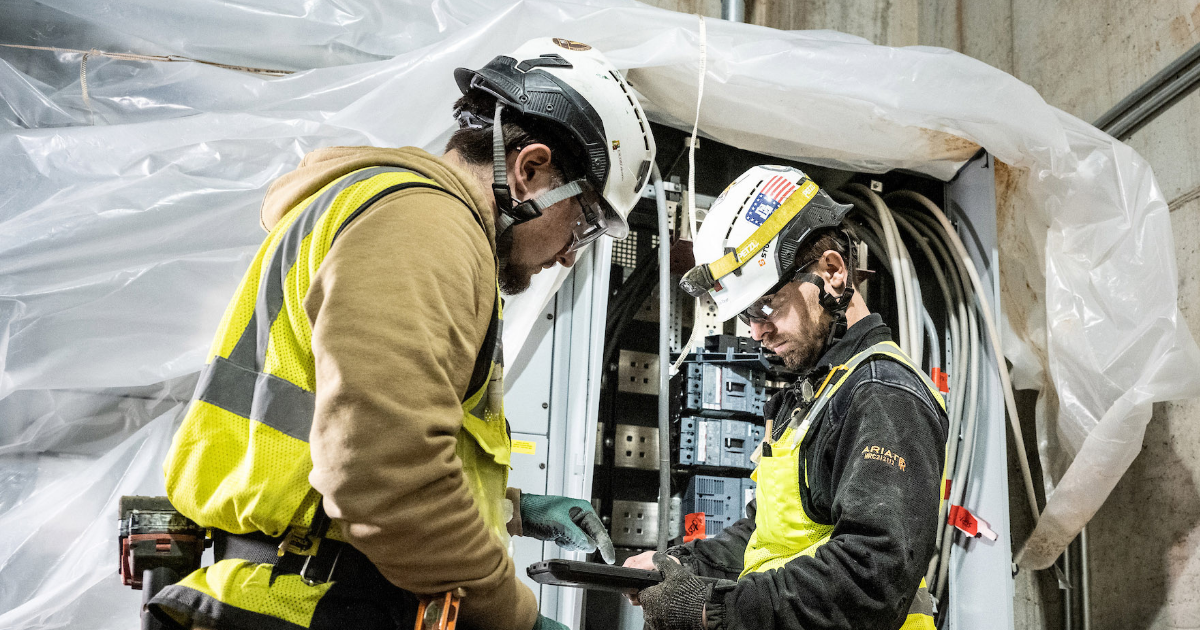
Header photo courtesy of Encore Electric