


A 30,000-foot View of the Recommendations from Governor Polis’s Postsecondary & Workforce System Executive Order
The Governor’s office recently released a report in response to Executive Order 2025-006 signed by Governor Polis in May 2025, which tasked state agencies to examine Colorado’s education-to-employment system and make recommendations. The primary recommendation from the report: create a new, unified agency to manage higher education and workforce in Colorado.
The Current State: Disconnected Programs
Finding skilled workers consistently ranks as the top challenge for employers across Colorado, and there are over 1 million working-age Coloradans with only a high school diploma. While Colorado has invested heavily in education and workforce programs over the past two decades, the system is fragmented and confusing. Colorado’s current postsecondary and workforce landscape includes:
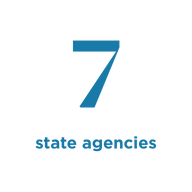
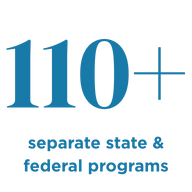
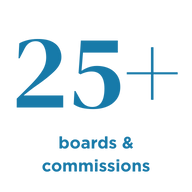
What this means:
- No single entity is accountable for system-wide results.
- Learners, job-seekers, and employers are confused about which program truly leads to opportunity.
- Standards, definitions, and performance measures vary across agencies.
- Duplicative technology, forms, and reporting requirements waste time and resources.
What the Report Recommends
Following the extensive analysis mandated by the Executive Order, the collaborative working group, comprised of Colorado agency leaders, recommends restructuring the system to create a single Department of Higher Education and Workforce.
Why this matters: A single entity would help standardize data and reporting, reduce administrative burden for education providers, and allow better coordination of strategy, funding, and quality outcomes across the state, leading to reduced confusion for students, employers, and institutions. The new structure creates clear ownership and accountability over system performance.
The Proposed Department’s Scope
Under the proposed structure, key postsecondary and workforce functions would be consolidated into one agency, including:
- Workforce training programs and workforce centers
- Oversight of the state’s postsecondary institutions (universities and technical colleges)
- The State Apprenticeship Agency
- Regional talent development initiatives
- Adult education and skills training programs
- Labor market data and analysis
- Programs serving specialized populations and K-12 would coordinate closely with the new department, but not be housed within it
The report argues that bringing these functions together allows the state to improve how the system operates. The report highlights several priority improvements:
- Consistent governance: Align boards and commissions around a single statewide strategy.
- Shared data and metrics: Standardize outcomes and build tools that help learners, families, and employers compare programs.
- Streamlined operations: Reduce duplicative contracting, reporting, and regulatory processes.
- Clearer pathways: Strengthen the quality and stackability of credentials, and improve credit for prior learning.
- Better navigation: Align career advising and create clearer tools for understanding options.
- Improve equity: Better engage underrepresented groups.
Several states, including Oklahoma, Alabama, Indiana, Tennessee, and Delaware, have recently consolidated or better aligned their higher education and workforce systems. Colorado’s proposal is consistent with this trend.
Building on Prior Momentum
This proposal builds on significant work already underway. The 1215 Task Force (established through HB22-1215) examined how to better connect high school programs, college coursework, and work-based learning. That task force identified the same core challenge: program complexity and fragmentation undermining access and effectiveness. The new department structure would implement many of the task force’s thirteen recommendations.
What This Means for Business
- Simplified engagement: one clear point of contact for training, apprenticeships, and talent needs
- Regional alignment: strong industry-led strategies coordinated across education and workforce partners
- Better data: more consistent information on program outcomes, ROI, and labor-market trends
- Few duplicative asks: reduced burden of participating in multiple uncoordinated initiatives
- One coherent strategy: increased impact from coordinated resources
Conclusion
The report offers a comprehensive assessment of Colorado’s current landscape and a proposed framework for improving how education and workforce systems operate together. State leaders will determine if and how to act on these recommendations.